


Earn Money & Rewards: Prograd
4.41.26K Reviews
App Specs
- Version
- 1.9.1
- Updated On
- License
- Free
- Downloads
- 100,000+
- Developer
- Prograd
- Categories
- Lifestyle
- Platform
- Android
Screenshots
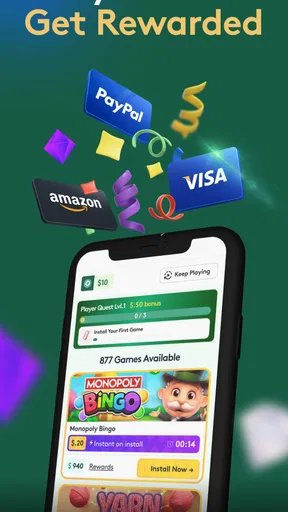

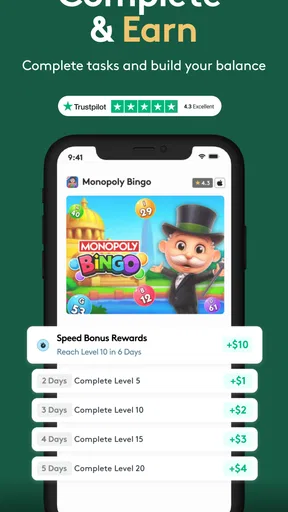
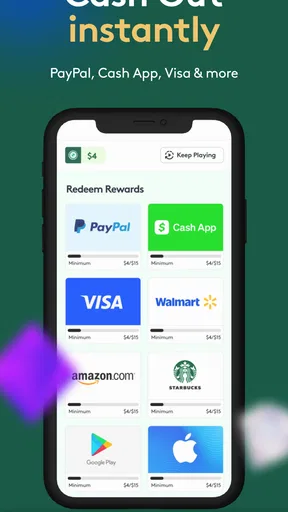
 Analysis by AppCompare
I approached Earn Money & Rewards: Prograd as a practical lifestyle app rather than as a guaranteed income source. Its basic idea is easy to understand: spend time on available games and surveys, then work toward cash or gift-card rewards. That makes it appealing for small gaps in the day, especially if you already enjoy casual games or do not mind answering questions. My main takeaway, though, is that the experience depends less on the promise of earning and more on how carefully you manage your time, eligibility, and reward progress.
Prograd is the developer behind the app, which is free to install and aimed at mature users aged seventeen and over. It belongs in the lifestyle category, but I found it more useful to think of it as a reward hub: a place where several small activities are gathered rather than a conventional budgeting, banking, or employment tool. That distinction matters because the app is best treated as an optional side activity, not as a replacement for regular income.
The app has attracted a 4.4 average from roughly twenty-one thousand ratings, with about one thousand two hundred written reviews and more than one hundred thousand installs. Those figures suggest that plenty of people are willing to try the concept, but they should not be read as a promise that every user will receive the same selection of tasks or reach rewards at the same pace. Surveys and game offers can vary according to a person’s profile, location, device, and current availability.
Where the experience usually becomes difficult
I’ve found that the hardest moments tend to come when an offer’s instructions and the action I remember taking do not line up. In this section, I’ll focus on spotting that mismatch early and deciding whether an activity is still worth the time. A simple review of the task’s conditions can make the next setup step much clearer.
The first challenge is understanding what actually counts
The most common source of confusion with reward apps is not opening an offer; it is knowing when an action has been properly tracked. A survey may require completion through the app’s own flow, while a game-related activity may depend on starting from the correct offer and meeting its stated condition. If I jump between screens, use another route to install something, or assume that simply opening a game is enough, I risk creating a mismatch between what I did and what the reward system can recognize.
That is why I would not begin by tapping every available option. I would first read the task wording from beginning to end, note the required action, and decide whether the time involved is reasonable. A reward that looks attractive in isolation may be poor value if it requires repeated play or several attempts at surveys that may screen me out. The useful comparison is not reward size alone; it is reward divided by the attention and time I am willing to spend.
Screen-outs are part of the survey experience
Survey users should also expect that answering initial questions does not guarantee access to the full questionnaire. Market research surveys often look for a particular audience, so a person can be rejected after providing basic profile information. That can feel like a failed task, but it does not automatically mean the app is broken. I would avoid rushing through those opening questions just to qualify, because inconsistent answers can make later surveys less useful and may create additional friction.
Worth Reading Before You Choose

Flipboard Shows What News Apps Must Do Beyond the Feed

Switching to Android Auto Means Rethinking Your Driving Routine

Google Calendar Makes a Crowded Week Easier to Manage

Ludo King Makes the Most of the Minutes Between Plans

Baby Panda World Brings Quick Play to Modern Phones, but Its Game Library Feels Busy

ESPN’s Live Game View Makes Following Close Games Easier
A better routine is to answer honestly, close a survey that repeatedly rejects me, and try a different activity rather than spending the entire session chasing one opportunity. This is one of the clearest differences between Prograd and a normal game: the goal is not simply to keep playing. The available work is conditional, and my eligibility can matter as much as my effort.
Reward expectations need to stay modest
The phrase “earn real cash and gift cards” makes the app sound direct, but I would interpret it carefully. The app can be useful for accumulating occasional rewards, yet it is not a dependable way to cover bills or replace paid work. The amount of available activity can change, and not every task will suit every user. If I install it expecting predictable daily earnings, I am likely to be disappointed even if the app is functioning normally.
For me, the healthiest approach is to set a personal time limit before starting. Ten or fifteen minutes while waiting for an appointment is one thing; repeatedly checking for new offers throughout the day is another. The second habit can turn a casual reward app into a distraction, especially when the return is uncertain.
Why a task may appear to stall
When progress does not show immediately, I would resist repeating the same action over and over. A delayed update can be caused by synchronization, a task that has not yet been recognized, or a requirement that was misunderstood. Reinstalling an associated game or restarting a survey without checking the original instructions may make the situation harder to untangle.
I would first return to the relevant activity inside Prograd and review its wording. I would then check whether I began the task through the app, whether I completed the exact required step, and whether the device still has a stable connection. These are simple checks, but they prevent the common mistake of treating every missing update as a technical failure.
Setup checks that save time later
Before I start another offer, I like to make the session easy to retrace: choose one activity, note its goal, and avoid changing devices or connection midway through. These small habits won’t guarantee that every task registers, but they reduce avoidable confusion. Next, I’ll look at the checks that make a clean start more practical.
Start with a clean, stable session
Before using an offer, I would close unrelated apps, make sure the connection is reliable, and avoid switching devices halfway through the same activity. This is not about making the phone unusually powerful; it is about keeping the path from the offer page to the completed action as consistent as possible. A clean start also makes it easier to remember what I selected and when I began.
The current version is 1.9.1, and the app supports devices running Android 7.0 or newer. That broad compatibility is helpful for people using older phones, but an older operating system or heavily restricted device may still produce a less comfortable experience than a recent phone. I would keep the app updated through the normal store process and avoid relying on an outdated installation when troubleshooting.
Read before launching a game offer
Game-based rewards are especially easy to misunderstand because the activity itself may look familiar. I would treat each offer as a separate instruction set. If it says to reach a particular milestone, I would not assume that installing the game or playing for a few minutes satisfies it. I would also avoid deleting and reinstalling the game during the same attempt, since that can disrupt the connection between the original launch and the progress being evaluated.
My practical tip is to take a mental note of the starting point rather than trying to manage several similar offers at once. Beginning one task, recording its condition, and finishing or abandoning it deliberately is less exciting than opening everything available, but it creates a much clearer trail if something goes wrong.
Use surveys selectively
Surveys are a better fit for people who can concentrate on reading questions carefully. I would not start one while commuting, watching a film, or doing another task that encourages rushed answers. A survey can contain screening questions, repeated formats, or wording that requires attention. If I am distracted, the chance of an incomplete or inconsistent response rises, and the time spent may produce nothing useful.
I would also keep my expectations realistic about availability. A survey that appears today may not be offered later, and a survey that fits one person may not fit another. That variability is normal for this type of app, so I see the survey section as a rotating source of opportunities rather than a fixed queue.
Keep reward activity separate from essential finances
Because the app deals with cash and gift-card rewards, I would use a separate mental category for its balance. I would not count pending or expected rewards as money available for rent, food, or urgent purchases. This small habit avoids a surprisingly common mistake: treating an unredeemed balance as though it were already in hand.
I would also choose activities based on clear personal boundaries. If a task asks for more time than I am comfortable giving, I would skip it. The free price removes the need to pay an entry fee, but it does not make my time free. That is the trade-off I would keep in view throughout the app.
What to do if installation or access is uncomfortable
The mature seventeen-plus age rating is worth taking seriously. I would not recommend the app to a child, and I would make sure the person using the device understands that reward activities can involve personal survey questions. Anyone uncomfortable sharing demographic or preference information should probably avoid the survey side and consider whether the app suits them at all.
If the app does not open correctly, I would start with ordinary, low-risk steps: close and reopen it, verify the connection, restart the phone, and check for an available update. I would avoid downloading supposed fixes from unofficial sources or entering account details into pages reached through random messages. A reward opportunity is never worth weakening basic device security.
Recovering a workflow when progress is missing
When progress seems missing, I try to rebuild the sequence rather than repeat the task immediately. Identifying the offer, launch route, and last completed step helps separate a tracking delay from a condition that was not met. The following section covers how to preserve useful context and decide when it is sensible to move on.
Reconstruct the last successful step
When a reward does not appear, I find it more useful to reconstruct the sequence than to guess. I would ask myself which activity I opened, whether I followed its launch path, what the stated goal was, and whether I actually reached that goal. I would then return to Prograd and look for the activity’s current status before taking another action.
This method is particularly useful when several game offers look similar. Starting a second offer can make it difficult to tell which one was meant to track the activity. I would rather finish one clear attempt or leave it alone than create a pile of half-started tasks that are impossible to compare.
Do not erase useful evidence too quickly
If I need help with a missing reward, I would keep the relevant task details visible and note the approximate time I started it. I would not immediately uninstall the associated game, clear every app setting, or reset the phone. Those actions may remove context that could help explain what happened. The goal is not to collect private information unnecessarily; it is simply to preserve enough detail to describe the issue accurately.
I would also avoid submitting the same survey repeatedly after an interruption. If the app returns me to the beginning, I would check whether the original attempt was still active before trying again. Repeated submissions can waste time and may create confusion about which attempt should receive credit.
Know when to stop troubleshooting
There is a point where an activity is no longer worth pursuing. If I have checked the instructions, connection, app version, and starting path, but the task remains unclear, I would move on rather than spend an hour trying to force a result. This is an important advantage of using Prograd casually: I can choose another available activity instead of treating one stalled offer as a personal challenge.
That decision may feel unsatisfying, but it protects the main benefit of the app, which is flexibility. The moment I spend more time diagnosing a small reward than I would have spent earning it, the trade-off has changed. A disciplined stopping rule makes the experience more enjoyable and keeps the app from taking over my free time.
When the app is not the cause
A stalled screen can have more than one explanation, so I avoid assuming the reward app itself is responsible. Device performance, an interrupted connection, or an offer that is no longer available can all change what I see. I’ll cover how to distinguish those situations and choose a better-fitting alternative when troubleshooting is not the answer.
Device and connection problems can look like tracking problems
A weak connection, aggressive battery management, limited storage, or an older device can interrupt a session without there being a problem with Prograd itself. If a game opens slowly or a survey reloads, I would first check whether other apps are behaving similarly. Testing the connection and freeing a little storage can be more useful than repeatedly tapping the reward screen.
I would also avoid moving rapidly between Wi-Fi and mobile data during a tracked activity. A change in connection at the wrong moment can make a completed step appear delayed. Staying on one reliable connection for the duration of a short task is a simple precaution, not a guarantee, but it removes one avoidable variable.
Availability is different from a technical error
Sometimes the issue is not that an offer failed; it is that no suitable offer is currently available. Surveys can fill or close, and game opportunities can depend on whether a user matches the intended audience. I would distinguish an empty or changing offer list from a screen that crashes, freezes, or refuses to load. The first is part of the app’s variable supply, while the second deserves normal troubleshooting.
This distinction also affects how I compare Prograd with alternatives. A conventional cashback service may be better for someone who wants rewards tied to purchases they already plan to make. A dedicated survey platform may be preferable for someone who wants a larger focus on questionnaires. A standard casual game is better for someone who wants entertainment without tracking conditions. Prograd’s appeal is the combination of game and survey routes, but that variety also means the experience is less predictable than a single-purpose option.
Privacy comfort should guide the decision
Anyone considering the app should think about whether the reward model feels comfortable, not just whether the rewards sound appealing. Surveys can ask about personal characteristics, preferences, or habits as part of their screening process. I would only answer questions I am comfortable answering, and I would leave if the process no longer felt appropriate.
This is also where the mature age rating matters in practical terms. The app is not a good choice for a young user who may not understand the difference between a casual question and information that should be handled carefully. Adults who prefer not to exchange attention and opinions for small rewards may also find a normal game or a conventional rewards program more satisfying.
Who will get the most from it
I think Prograd suits patient users who enjoy short, optional activities and can accept that some attempts will not fit their profile. It works best when opened with a modest goal: complete one suitable survey, try one clearly explained game task, or use a spare few minutes without expecting a fixed return. People who already play mobile games may appreciate having a possible reward angle, provided they do not let the reward dictate their entertainment.
It is less suitable for anyone seeking dependable income, instant payouts, or a completely passive experience. It is also a poor match for users who dislike reading conditions, do not want to answer screening questions, or become frustrated when an activity does not track immediately. In those cases, a simpler rewards program or an ordinary game would probably feel more honest and less demanding.
My practical verdict after using it as a reward tool
I see Prograd as a free way to turn selected spare moments into progress toward cash or gift cards, not as a financial solution. Its strongest idea is the choice between surveys and games, because I can switch when one type of activity is unavailable or simply does not suit my mood. The app’s weakness is the same flexibility: the quality and suitability of opportunities can shift, and the user has to pay attention to the conditions.
My best advice is to begin with one activity, read its requirements carefully, use a stable connection, and give it a clear time limit. If progress seems missing, retrace the launch and completion steps before reinstalling anything. If the task still does not make sense, stop and choose another rather than allowing a small reward to consume the evening.
After that, the decision is fairly straightforward. I would recommend it to an adult who understands the variable nature of surveys and game offers and wants a no-cost option for occasional rewards. I would skip it if I needed predictable earnings, disliked sharing survey information, or wanted entertainment without any completion conditions. Used with those boundaries, the smartest way to approach Prograd is as a low-stakes extra, not a promise of income.
Pros
- Clear progress tracking helps users monitor earnings and completed tasks.
- Offers multiple reward options instead of relying on a single payout method.
- Useful financial content can help younger users build money-management habits.
- The interface is generally simple to navigate for first-time users.
- Notifications can remind users about new tasks
- offers
- and available rewards.
Cons
- Some earning opportunities may be limited by location or user eligibility.
- Rewards can take time to accumulate
- especially for users with few available tasks.
- Certain offers may require purchases
- subscriptions
- or lengthy sign-up processes.
- Payout rules and minimum withdrawal thresholds may not suit every user.
- Frequent notifications and promotional content can feel distracting over time.
FAQs for Earn Money & Rewards: Prograd
What is Earn Money & Rewards: Prograd?
Earn Money & Rewards: Prograd is a personal finance and rewards app designed to help users improve their financial habits while earning benefits for completing eligible activities. Depending on your location and account status, the app may offer budgeting tools, financial education, challenges, partner offers, or rewards. Available features can change over time, so review the current terms before using it.
How can I earn rewards with Prograd?
Prograd may allow users to earn rewards through activities such as completing financial tasks, engaging with educational content, meeting selected goals, or using qualifying partner services. The exact opportunities depend on your country, eligibility, and the promotions available in the app. Always check the activity requirements, completion deadlines, and reward conditions before starting.
How do I receive my rewards, and are there any fees?
Reward delivery methods and processing times depend on the specific offer and your account. Some rewards may be credited inside the app, while others could be provided through vouchers, transfers, or another supported method. Certain activities may include eligibility restrictions, minimum thresholds, or fees. Read the reward details carefully and confirm all requirements before redeeming.
Is Prograd safe to use, and what information does it require?
Because Prograd focuses on money management and rewards, it may request personal, financial, or identity information to provide features, verify eligibility, prevent fraud, or connect supported services. Before registering, review its privacy policy, permissions, and security information. Use a strong password, avoid sharing login details, and only connect financial accounts if you understand the access being granted.
Is Earn Money & Rewards: Prograd available to everyone?
Availability may depend on your country, age, device, and eligibility for particular financial products or promotional campaigns. Some features can be limited by location, account type, or verification requirements, and rewards may not be available in every region. Check the app listing and Prograd’s current terms before downloading, especially if you expect to access a specific offer or withdrawal method.


